Michigan had 227,180 business establishments in 2023, including 21,290 construction firms, 13,222 specialty trade contractors, 28,956 health care providers and 5,797 auto repair shops. Most of them live on phone calls and form requests, and for many that first contact starts with a stranger opening the website on a phone and deciding within seconds whether to stay.
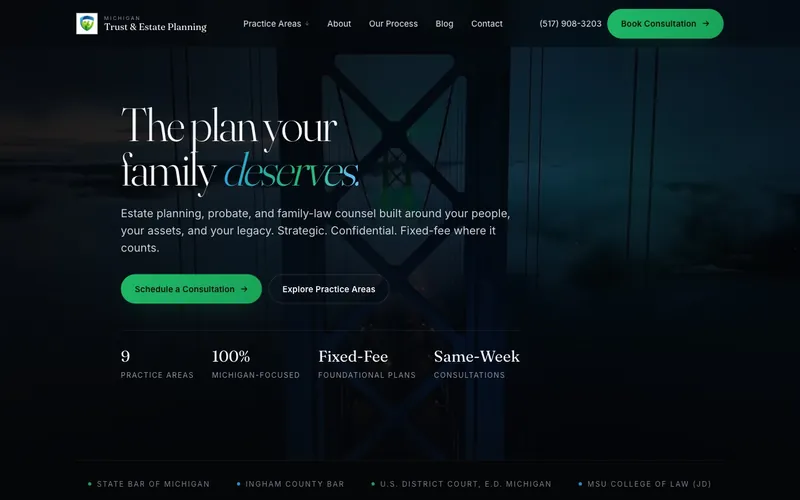
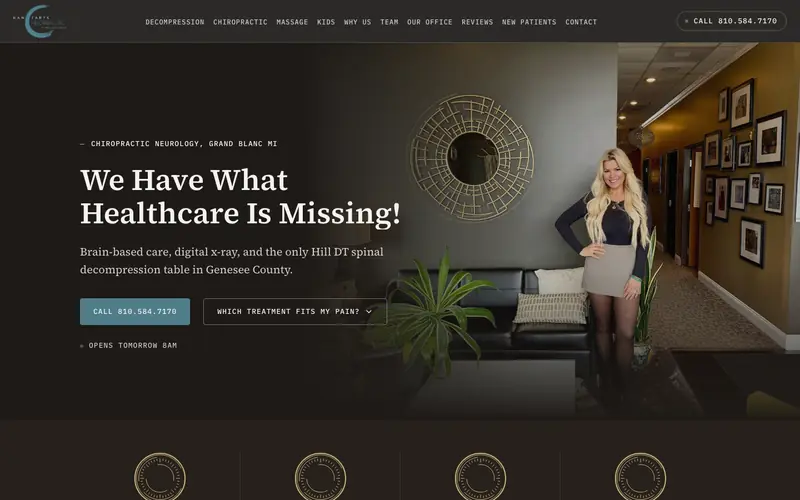
We wanted numbers rather than opinions, so in October 2026 we tested six Michigan business websites built with WordPress and the Elementor page builder. We used Google's PageSpeed Insights on its mobile setting and took the median of three runs. They scored 48, 59, 50, 56, 61 and 62 out of 100, and their pages weighed 3.6 to 5.6 MB. One Stop Customs in Warren, a site we hand coded, scored 91 to 97 with a page weight of 0.6 MB, and our own web design page scored 96 to 100.
Page builders made sense when the goal was letting anyone assemble a page without a developer. The price of that convenience is code: much of what sits behind every widget, animation and layout option loads for visitors whether a page uses it or not, alongside plugins that need constant updates. That is why we treat drag-and-drop builders and generic templates as legacy technology for a business website. A hand-coded site ships only what each page needs, has fewer moving parts to patch and is not tied to any builder or theme. You own the files and the domain, and you can take them to any host.
Michigan adds tests of its own. A site has to load on a fast connection in Troy and on a weak signal along a two-lane road in the Upper Peninsula or the Thumb, where a heavy page can stall. Seasonal businesses in Grand Traverse, Emmet or Mackinac counties need pages that shift emphasis as the season turns. Service-area businesses need pages for the places customers actually name, which here are often townships: a Brighton contractor's customers may live in Genoa, Green Oak or Hamburg townships, each larger than the city of Brighton.